






















Understanding Active Listening in Family Dynamics
Defining Active Listening
Active listening goes beyond hearing words; it is a conscious effort to fully understand and engage with what a family member is expressing emotionally and verbally. Imagine a father sitting down after a long day to really tune in as his teenager talks about their struggles at school. Instead of offering quick advice or distraction, the father maintains eye contact, nods occasionally, and asks clarifying questions that show genuine interest. This focused attention signals to the teenager that their feelings matter, promoting openness and trust.

The Importance of Listening in Family Relationships
In family life, conversations often carry more than just information—they carry feelings, fears, and hopes. When family members practice active listening, it validates these emotions and fosters stronger bonds. For instance, a mother who listens patiently to her young child’s fears about a new school helps calm anxiety and builds confidence. Without this mindful listening, misunderstandings can grow, leading to frustration and emotional distance. Active listening is the bridge that connects hearts in a family, making relationships warmer and more resilient.
Core Skills for Effective Active Listening
Nonverbal Communication Cues
Sometimes what isn’t said speaks louder than words. Nonverbal signals such as eye contact, facial expressions, and body posture play a crucial role in active listening. Picture a couple sitting across from each other during a tense discussion; one partner’s posture leans forward with relaxed shoulders, while the other crosses arms defensively. The first partner’s nonverbal openness encourages dialogue, while the latter’s closed stance may shut down conversation. Being aware of these cues can help family members adjust and foster a more welcoming communication space.
Reflective Feedback Techniques
Reflective feedback helps confirm understanding and shows empathy. For example, a brother shares feeling overwhelmed by responsibilities. Instead of jumping to solutions, the sister responds, “It sounds like you’re feeling stretched too thin and could use some support.” This technique not only clarifies what was said but also reassures the speaker that they are heard and understood. Reflective listening can turn potentially painful or confusing moments into opportunities for deeper connection.
Practical Steps to Foster Active Listening at Home
Creating a Supportive Environment
Home is where active listening flourishes when distractions are minimized and everyone feels safe to express themselves. A practical example is designating ‘family talk time’ without phones or TV, allowing everyone’s voices to be the focus. A living room with comfortable seating arranged in a circle can encourage eye contact and inclusivity. By intentionally creating such spaces, families invite openness and respect in their daily interactions.
Setting Intentions Before Conversations
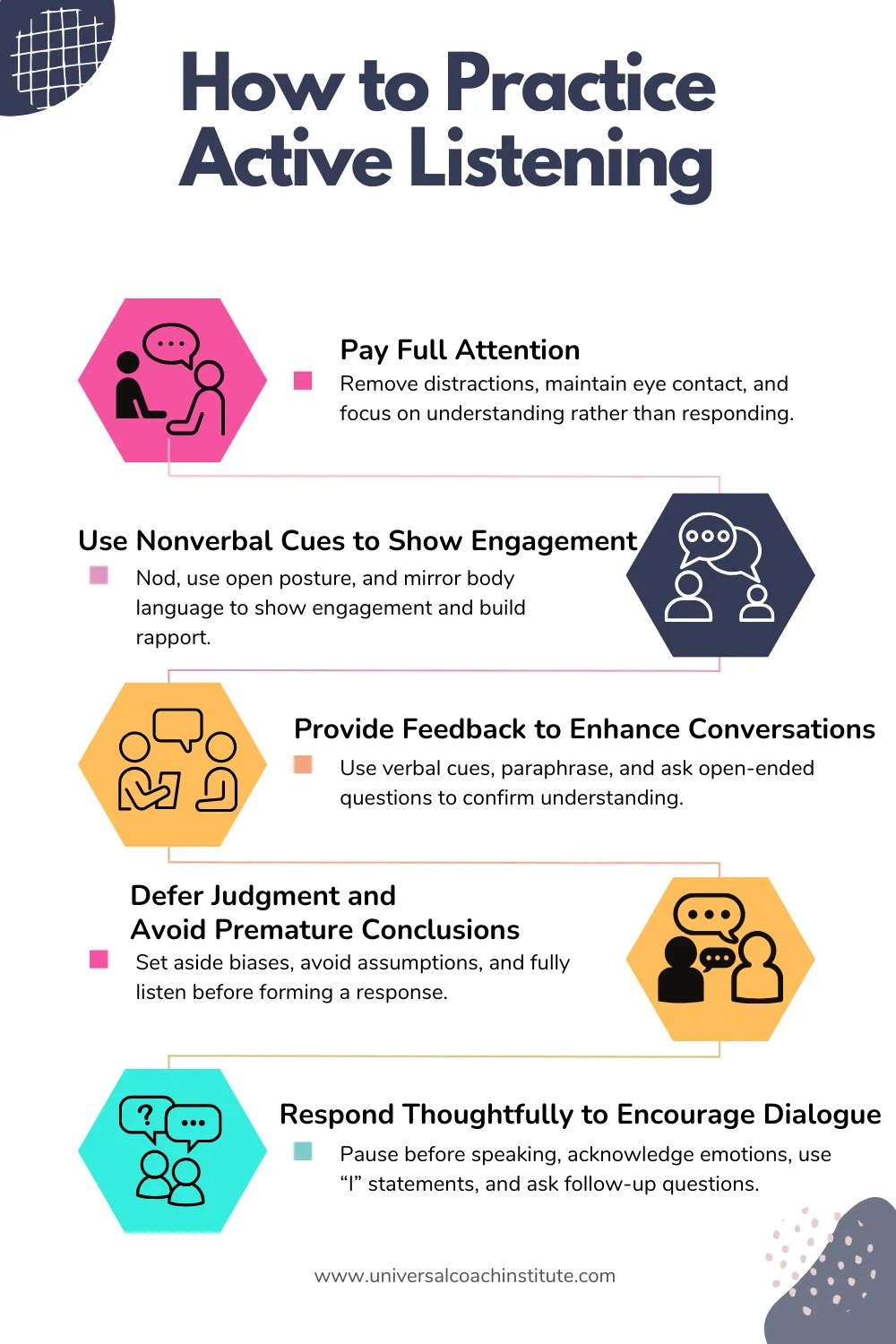
Before diving into sensitive discussions, it’s beneficial to clarify the conversation’s goal. Consider a family dinner where a parent says, “Tonight, I want us to listen to each other’s thoughts about the weekend plans without interrupting.” This sets a tone of mutual respect and encourages participants to be present and patient. Establishing clear intentions helps prevent misunderstandings and keeps conversations on track.
Common Barriers to Active Listening in Families
Emotional Triggers and How to Manage Them
Family conversations can quickly become heated when old wounds or frustrations resurface. Recognizing personal triggers is key to maintaining active listening. For instance, a parent who feels criticized might pull away or react defensively. Identifying these triggers beforehand allows individuals to pause and choose responses consciously. Techniques such as taking deep breaths or silently repeating calming affirmations can prevent emotional hijacking and keep dialogue constructive.
Interruptions and Distractions to Avoid
In today’s fast-paced households, constant interruptions from phones, chores, or external noise can derail even the best-intended conversations. Imagine a child trying to share a story while the parent’s attention is split between responding to an email and a text message. Such distractions undermine the child’s confidence and the quality of communication. Setting boundaries, like turning off devices during talks or scheduling conversations when everyone is free from pressing tasks, greatly enhances listening quality.
Role of Active Listening in Conflict Resolution
Turning Arguments into Understanding
Conflict is inevitable in families, but active listening can transform arguments into moments of insight and connection. Consider a couple disagreeing over finances. Instead of interrupting or blaming, each partner takes turns sharing feelings while the other listens attentively. This approach uncovers the underlying fears or needs driving disagreement, allowing solutions to be crafted with empathy rather than defensiveness.
Building Trust Through Listening
When family members consistently listen without judgment or interruption, they cultivate trust. A child confiding in a parent about peer pressure builds courage when the parent listens openly and validates the child’s experience without immediate correction. Over time, this habit creates a safe emotional space where everyone feels valued and understood, strengthening the family’s foundation.
Encouraging Children to Practice Active Listening
Age-Appropriate Strategies
Introducing active listening to children requires patience and adaptation to their developmental stage. For toddlers, modeling simple attention through games like “Simon Says” can build focus. Older children benefit from storytelling exercises where they repeat what was heard to ensure comprehension. Praise and gentle guidance, such as reminding a reluctant child that making eye contact is a sign of respect, nurtures their growing listening skills without pressure or anxiety.
Modeling Listening Behavior as Parents
Children learn much from observing adults. Parents who make a conscious effort to listen actively during daily interactions set a powerful example. For instance, a mother who puts away her phone and maintains eye contact when her child speaks demonstrates respect and attentiveness. These consistent behaviors shape a child’s understanding of what it means to truly listen, encouraging them to mirror those skills in their relationships.
Measuring the Impact of Active Listening on Family Health
Signs of Improved Communication
Families practicing active listening often notice a shift towards more meaningful and less conflicted conversations. Instead of shouting matches or silent treatments, members engage with kindness, ask questions, and clarify misunderstandings quickly. A father who once felt distant from his teenage daughter might hear her express frustrations openly without fear, signaling a deeper connection.
Long-Term Benefits for Emotional Wellbeing
Beyond immediate harmony, active listening contributes to lasting emotional health. Family members develop resilience and empathy, learning to support each other through challenges. Children raised in a listening-rich environment tend to have higher self-esteem and better social skills. In the long run, these strengthened bonds act as a buffer against stress and foster a home atmosphere where everyone feels safe, heard, and loved.