
























Understanding Toddler Sleep Resistance
Common Reasons Why Toddlers Resist Bedtime
Imagine Sarah’s evening routine with her two-year-old, Liam. Every night, as bedtime approaches, Liam suddenly becomes energetic and refuses to settle down. This resistance is a common challenge many parents face. Toddlers often resist bedtime due to a mix of developmental changes, curiosity about their environment, and the desire for independence. Around this age, toddlers start to test limits and express their will, making the transition from playtime to sleep a frequent battleground. Additionally, factors like overtiredness, separation anxiety, or overstimulation from the day can turn an ordinary bedtime into a struggle.
The Impact of Inconsistent Sleep Patterns on Toddlers
Inconsistent sleep patterns can disrupt a toddler’s natural rhythm, much like trying to tune a radio that keeps drifting off-frequency. When bedtime varies dramatically or the routine changes night by night, toddlers can become confused and anxious about what’s expected. For example, if one night the routine includes a bath and story but another night skips these steps, toddlers may resist shutting down due to unpredictability. This inconsistency often leads to longer times to fall asleep, more frequent night wakings, and ultimately a tired, cranky child by morning.
Fundamentals of a Successful Bedtime Routine
Importance of Predictability and Structure

Take the story of Mia, whose parents established a consistent bedtime routine that helped her settle much easier. Predictability creates a sense of security for toddlers, signaling that it’s time to unwind. Structured routines reassure children that the day is ending on familiar terms, helping their minds and bodies prepare for sleep. When a toddler knows what comes next, they feel safe and are more willing to cooperate, especially in moments of resistance.
Ideal Timing: When and How to Start the Routine
Timing is everything when it comes to bedtime routines. Starting too late can mean the child is overtired, making it harder to fall asleep despite being exhausted. Conversely, starting too early might find the child wide awake and uninterested in sleep. A solid rule of thumb is to watch for sleepy cues—rubbing eyes, yawning, or zoning out. Beginning the routine about 15 to 30 minutes before the desired bedtime allows enough wind-down time without dragging it out excessively. For toddlers transitioning from one nap, keeping wake windows consistent, such as a six-hour wake time before nap and five hours before bedtime, can set the stage for success.
Step-by-Step Guide to Creating a Toddler-Friendly Bedtime Routine
Wind-Down Activities to Calm the Mind and Body
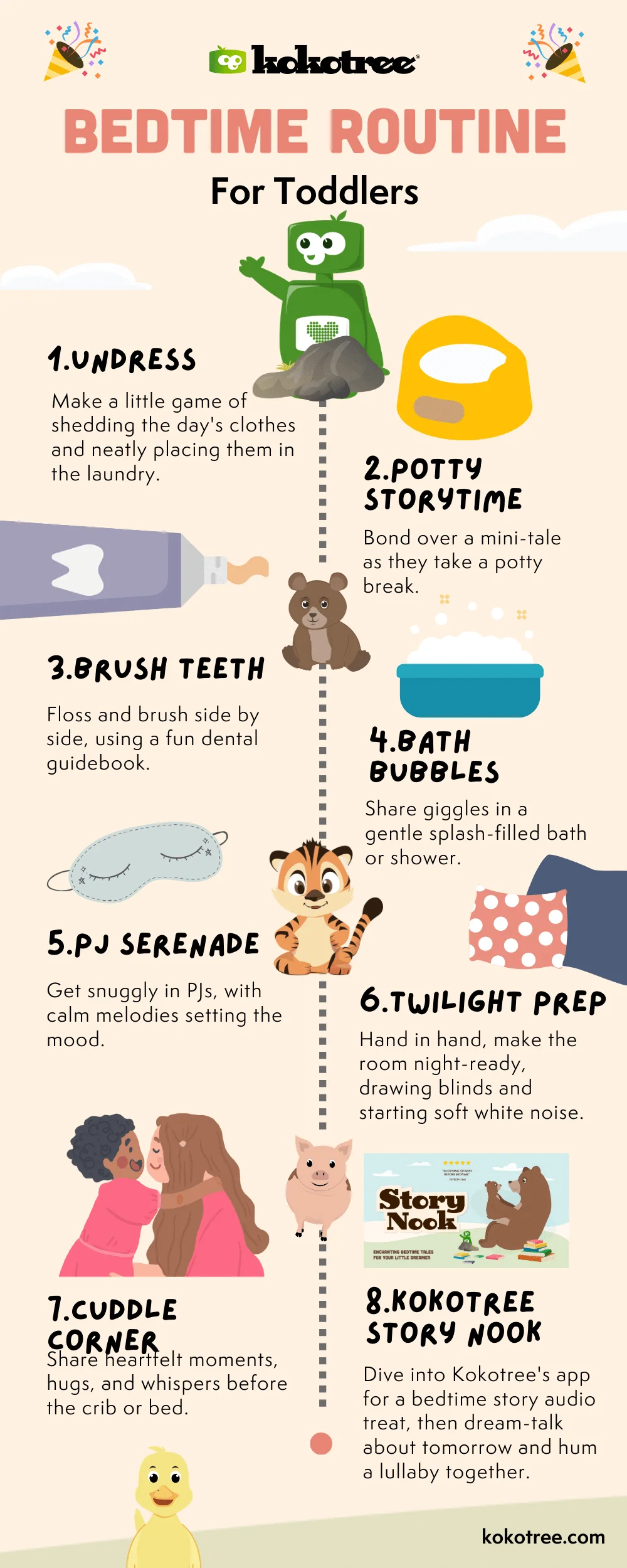
Wind-down activities are the cornerstone of easing a toddler into sleep mode. For example, reading a favorite book or softly singing lullabies can gently shift their attention away from stimulating play. Avoiding physical activity or wild play is crucial—running around or roughhousing only energizes toddlers at a time when calm is needed. Some families find tracing gentle messages on the child’s back or making shadow puppets with a flashlight helps children feel comforted and ready for rest.
Incorporating Soothing Environmental Elements
Environmental cues play a significant role in signaling bedtime. Soft lighting, such as a dim nightlight or a calming lamp, helps lower alertness. Running a fan or a sound machine with white noise or gentle nature sounds can mask household noises and create a cozy atmosphere. Ensuring that bedroom shades are drawn to block outside distractions also supports a toddler’s ability to settle. These small adjustments contribute to a consistent and inviting sleep space that encourages relaxation.
Setting Boundaries and Communicating Expectations
Establishing loving but firm boundaries is essential. Toddlers learn through routine and reaction. When Emma’s parents calmly explained that once the lights were out, it was time to stay in bed and rest, she gradually understood. Clear communication paired with gentle reassurance helps toddlers know what’s expected without feeling abandoned or scared. It’s important to address any stalling tactics with consistency—responding the same way each time prevents reinforcing unwanted behaviors like tantrums or prolonged bedtime protests.
Handling Resistance and Nighttime Challenges
Strategies to Reduce Bedtime Protests
Resistance is natural, but several strategies can reduce bedtime battles. One practical approach is to avoid starting the routine when a child is already overtired. Parents who catch their toddler showing early sleepiness can implement the routine promptly, preventing the “wired but tired” state. Eliminating stimulating screens or sugary treats before bedtime helps avoid heightened alertness. Also, keeping the bedtime routine roughly the same length— between 15 to 40 minutes—balances enough calming without prolonging delays. For some toddlers, incorporating a “lovey” or favorite blanket provides comfort during moments of protest.
Dealing with Night Wakings and Separation Anxiety
Night wakings and separation anxiety can be especially tough. When Lucas began crawling and exploring, he frequently woke up and cried for his parents. Responding with calm reassurance rather than immediate picking up sometimes helped him settle back independently. Establishing predictable responses to wake-ups—such as softly shushing or briefly comforting without turning on lights—helps toddlers feel secure while encouraging self-soothing. Over time, this reduces the frequency and intensity of nighttime interruptions.
Parental Tips for Maintaining Consistency
Staying Calm and Patient Through the Process
Parents often find that their attitude sets the tone for bedtime. When bedtime turns into a struggle, it’s easy to become frustrated. However, maintaining calm and patience can diffuse tension. For instance, when Olivia resisted sleep after a busy day, her mother took deep breaths and spoke softly, which helped normalize the experience. Remaining consistent even during setbacks encourages toddlers to trust the routine and feel safe, despite occasional battles.
Adjusting the Routine as Your Toddler Grows
As toddlers develop, their sleep needs change. Rather than rigidly sticking to a routine, it’s important to listen and adapt. For example, moving bedtime by 15-minute increments can align better with a child’s natural sleep rhythm. If certain activities no longer engage or soothe the child, parents might refresh the routine by swapping in new calming activities like listening to stories or a gentle massage. Flexibility within a predictable framework helps maintain effectiveness and supports growing independence.
Bonus: Recommended Products and Tools to Support Sleep
Sleep-Friendly Lighting and Sounds
Tools such as soft nightlights with adjustable brightness or sound machines with nature sounds like rainfall or ocean waves can make a difference in creating a serene environment. Parents often find that the steady hum of a fan or a white noise machine helps mask disruptive household noises, making it easier for toddlers to stay asleep through the night.
Comfort Items and Sleepwear Suggestions
Comfort items like a favorite stuffed animal, a soft blanket, or a pacifier can provide emotional security. When it comes to sleepwear, breathable fabrics and appropriate layering help toddlers stay comfortable without overheating or feeling chilly, both of which can disturb sleep. A sleep sack is often a safe, cozy alternative to loose blankets, giving toddlers warmth without the risk of covering their faces.