
























Understanding Active Listening and Its Role in Conflict Resolution
Defining Active Listening
Active listening is a communication technique that involves fully concentrating, understanding, responding, and then remembering what is being said during a conversation. Unlike passive hearing, active listening requires the listener to engage with the speaker both mentally and emotionally. This means putting aside distractions and focusing on the verbal and non-verbal cues to grasp the full message. In relationships, active listening is an essential skill that helps partners feel genuinely heard and valued.
The Psychology Behind Conflict in Relationships
Conflicts in relationships often arise from misunderstandings, unmet expectations, and communication breakdowns. Psychological factors such as stress, emotional triggers, and different communication styles contribute to escalating tensions. When partners are defensive or feel unheard, conflicts can deepen, leading to frustration and disconnection. Understanding that conflict is often less about the issue itself and more about the emotional needs behind it is a key step in resolving disputes effectively.
How Active Listening Transforms Conflict Dynamics
Active listening changes the way conflicts unfold by shifting the focus from winning an argument to understanding each other. When one partner listens attentively, it signals respect, reduces defensiveness, and fosters a safe space for open dialogue. This approach helps to de-escalate emotions and encourages both parties to collaborate on solutions, rather than attacking each other. Through active listening, conflicts become opportunities for growth and deeper connection.
Essential Active Listening Skills for Resolving Relationship Conflicts
Techniques to Enhance Focus and Presence
Developing the ability to be fully present during conversations requires intentional effort. Beginning by setting aside distractions such as phones or television helps establish focus. Mindfulness techniques can support staying in the moment, preventing the listener’s mind from wandering to personal thoughts or judgments. Practices like scheduling dedicated time for uninterrupted talk also reinforce the commitment to giving full attention, which is critical during emotionally charged discussions.
Nonverbal Cues That Promote Understanding
Nonverbal communication plays a subtle yet powerful role in expressing engagement. Maintaining appropriate eye contact and nodding at moments demonstrates attentiveness and encourages the speaker to continue. Avoiding closed body language—like crossing arms or legs—and refraining from yawning or looking away for long periods prevents signals of disinterest or defensiveness. These physical signs make the other person feel safe and validated at a subconscious level.
Validating Emotions Without Judgment
Validation means recognizing and accepting the other person’s feelings without necessarily agreeing with them. Using empathetic phrases such as “your anger makes sense” or “I understand why you feel that way” helps convey this acceptance. Validation soothes emotional tension by acknowledging that the emotions are real and important. It is essential to differentiate validation from problem-solving, as addressing feelings comes before trying to fix the issue at hand.
Step-by-Step Guide: Applying Active Listening During Conflicts
Setting the Stage for Constructive Dialogue
Before starting a difficult conversation, create a calm environment by choosing a private, comfortable space without distractions. Agree on a time when both partners are ready to engage. Setting ground rules, such as no interruptions and speaking respectfully, helps to establish mutual understanding. This preparation signals a shared commitment to resolving the conflict rather than escalating it.
Listening Without Interrupting or Reacting
When the conversation begins, focus on listening without interjecting or immediately reacting. Resist the urge to jump in with solutions or defenses. Instead, prioritize absorbing the speaker’s message fully, paying attention to tone and emotions behind the words. This patient approach encourages openness and prevents misunderstandings that arise when people feel rushed or dismissed.
Echoing and Clarifying to Ensure Mutual Understanding
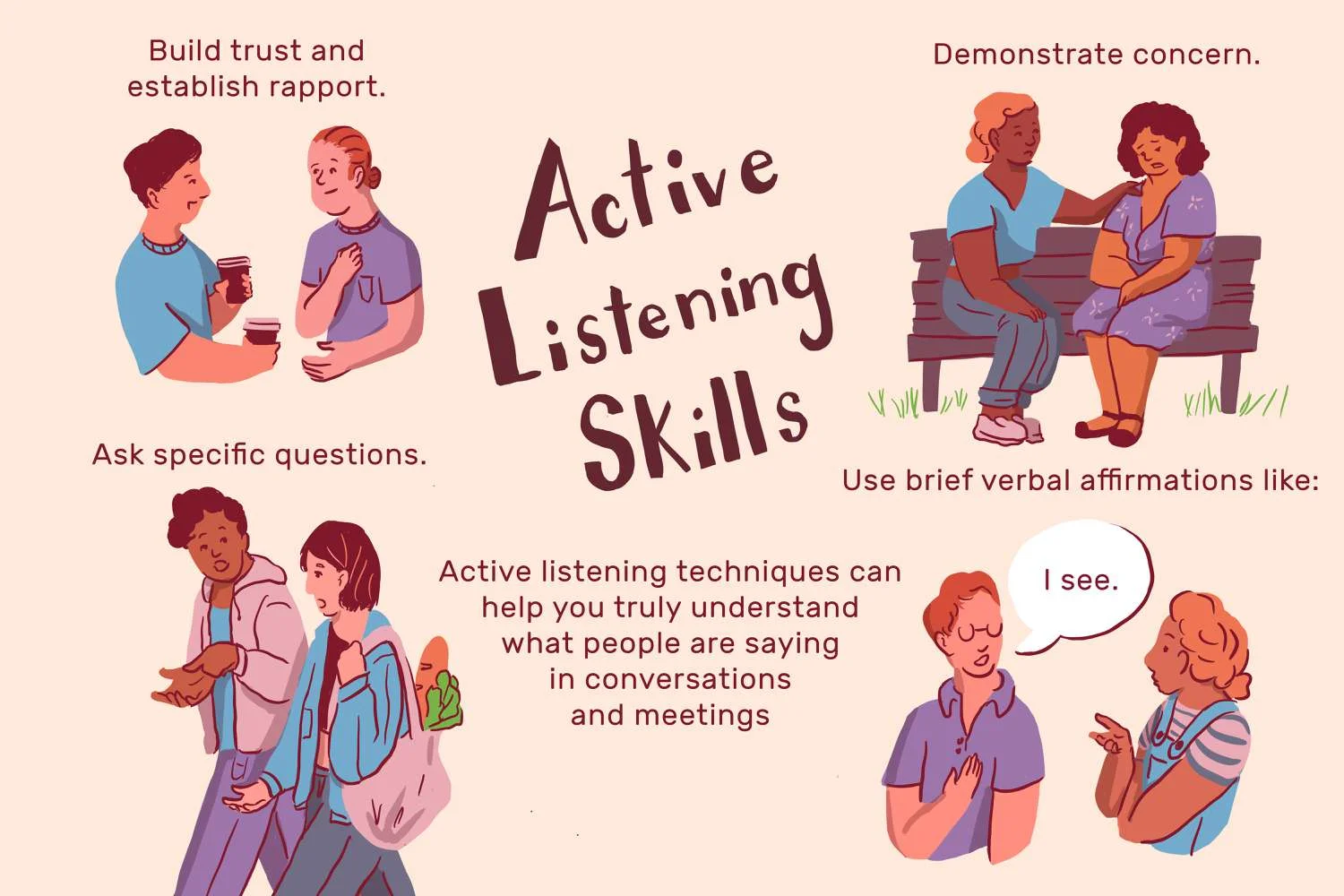
After the speaker has shared their thoughts, reflect back what you heard by paraphrasing or summarizing. For example, saying “What I’m hearing you say is…” confirms that you are engaged and provides an opportunity to correct any misinterpretations. Asking open-ended questions helps to deepen understanding and signals genuine curiosity. This ongoing exchange builds a connection where both partners feel understood.
Responding Thoughtfully Rather Than Reactively
Once the speaker feels heard, respond in a way that is calm and considerate. Avoid defensive or confrontational replies that can reignite conflict. Instead, use validating and non-confrontational language to soothe your partner’s feelings. Tailoring your response to the emotional or logical needs of your partner – recognizing, for example, that men often respond better to logical validation first while women may prefer emotional empathy initially – can improve receptiveness and cooperation.
Challenges in Using Active Listening and How to Overcome Them
Common Barriers to Effective Listening
Obstacles like distractions, emotional reactivity, and preconceived biases often undermine active listening. Personal stress or fatigue can reduce one’s capacity to focus, while strong emotions may prompt interrupting or arguing. Additionally, differences in communication styles or expectations about the discussion can cause frustration. Being aware of these barriers is the first step toward managing them.
Strategies to Stay Calm and Patient
To overcome these challenges, incorporate calming techniques such as deep breathing or brief pauses before responding. Practicing mindfulness can help maintain patience by anchoring attention in the present moment. Setting clear intentions to listen without judgment and reminding yourself of the benefits of understanding your partner can motivate persistence despite difficulties.
Maintaining Consistency Over Time
Making active listening a regular habit requires dedication. Celebrate small successes in communication to reinforce the behavior, and forgive occasional setbacks without discouragement. Scheduling routine check-ins or conversations can embed active listening into the relationship’s rhythm, helping partners build enduring patterns of trust and empathy.
The Long-Term Benefits of Active Listening in Relationships
Building Trust and Emotional Safety
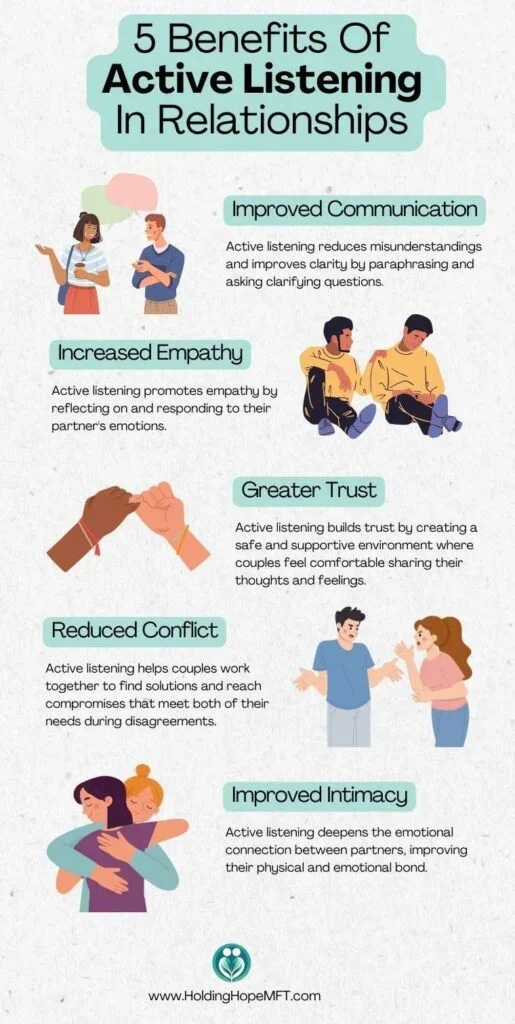
When partners consistently practice active listening, they cultivate an environment of trust where both feel safe to express themselves honestly. This emotional safety diminishes fear of judgment or rejection, allowing vulnerabilities to be shared. Over time, this deepens intimacy and strengthens the bond between partners.
Reducing Misunderstandings and Resentments
Active listening minimizes the chance of miscommunication by clarifying intentions and emotions in real time. It prevents assumptions that often lead to resentment or hostility. Addressing concerns openly and empathetically reduces the build-up of unresolved tensions, which can otherwise erode the relationship’s foundation.
Encouraging Healthy Communication Patterns
Finally, active listening fosters positive communication habits that benefit all areas of a relationship. It encourages mutual respect, patience, and cooperation. As partners model these behaviors, they create a feedback loop that promotes ongoing understanding and collaboration, making conflicts less frequent and easier to navigate.