























Understanding Emotional Eating
Defining Emotional Eating and Its Causes
Emotional eating involves consuming food in response to feelings rather than physical hunger. It often arises from stress, sadness, boredom, or anxiety. These emotions can prompt cravings for comfort foods, triggering a cycle that masks underlying emotional needs. Understanding this behavior is crucial for addressing its roots instead of simply managing symptoms.
How Emotional Eating Impacts Weight Loss Efforts
Emotional eating can derail weight loss by causing overeating or poor food choices. Unlike physical hunger, emotional hunger emerges suddenly and is linked to cravings for high-calorie, sugary, or fatty foods. This pattern makes it difficult to maintain a calorie deficit and can lead to feelings of guilt or shame, further complicating sustainable weight control.
Identifying Emotional Eating Triggers
Common Emotional and Environmental Triggers
Emotional eating often stems from identifiable triggers such as stress at work, relationship challenges, fatigue, or even social situations. Environmental cues like seeing snacks, advertisements, or even certain times of day can prompt eating without genuine hunger. Recognizing these triggers enables better control over the impulse to eat emotionally.
Tracking Patterns Through Journaling
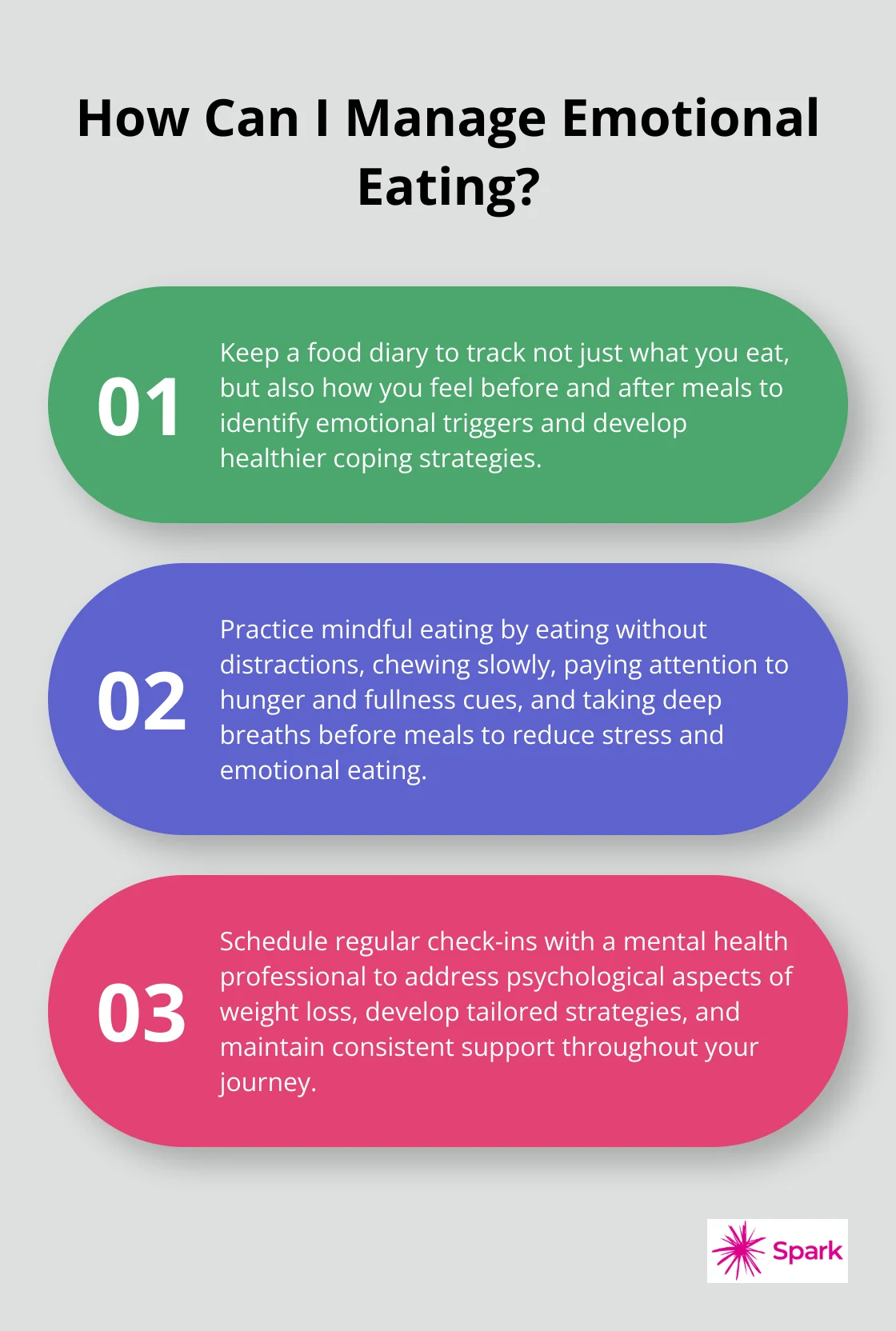
Keeping a food and mood journal helps reveal the connection between emotions and eating habits. Documenting what you eat, when, and how you feel provides insight into the triggers and patterns behind emotional eating episodes. This practice encourages mindfulness and empowers individuals to develop targeted strategies to break the cycle.
Behavioral Strategies to Manage Emotional Eating
Developing Mindful Eating Habits
Mindful eating focuses on paying full attention to the experience of eating—recognizing hunger cues, savoring flavors, and acknowledging fullness. This approach reduces mindless consumption and the tendency to eat in response to emotions. Practicing mindfulness helps differentiate between physical and emotional hunger, promoting healthier decisions.
Effective Stress Reduction Techniques
Addressing the root causes of emotional eating involves managing stress through non-food methods. Techniques such as deep breathing, meditation, yoga, or engaging in hobbies provide healthier outlets for emotional discomfort. These practices can reduce the frequency and intensity of cravings linked to emotional stress.
Building a Support System
The Role of Friends, Family, and Professionals
Support from friends and family strengthens efforts to overcome emotional eating. Their understanding and encouragement can provide motivation during challenging moments. Additionally, seeking help from professionals like dietitians or therapists offers specialized guidance to address emotional and behavioral factors that impact eating habits.
Joining Support Groups for Accountability
Support groups create a community of individuals facing similar challenges. They offer a platform to share experiences, exchange coping strategies, and hold each other accountable. Being part of such groups reduces isolation and cultivates a sense of belonging, which is beneficial for sustaining long-term changes.
Creating Sustainable Lifestyle Changes
Incorporating Balanced Nutrition
A balanced diet rich in whole foods, lean proteins, healthy fats, and fiber helps stabilize blood sugar and mood. This foundation minimizes cravings and reduces the likelihood of emotional eating. Planning meals and snacks that nourish the body supports both physical health and emotional well-being over time.
Establishing a Consistent Exercise Routine
Regular physical activity improves mood by releasing endorphins and reducing stress hormones. Exercise also fosters body awareness and self-confidence, which can diminish emotional triggers related to self-esteem. Incorporating enjoyable movement routines enhances adherence and complements dietary efforts for lasting weight management.
Tools and Resources for Emotional Eating Management
Apps and Tracking Tools
Various apps assist with tracking food intake, moods, and triggers, helping users identify emotional eating patterns. These digital tools encourage mindfulness and provide reminders to practice coping strategies. Utilizing technology can make the process of managing emotional eating more accessible and structured.
Recommended Reading and Workshops
Engaging with expert-written books and attending workshops focused on emotional eating offers valuable insights and practical techniques. Learning from personal stories and professional advice deepens understanding and motivates change. Participating in educational events also raises awareness and connects individuals with supportive communities.